flowchart LR

subgraph G1["Conceptual"]
    A["Verbal<br/>description"]
    B["Causal-Loop<br/>Diagram"]
end

C["Model<br/>Formulation"]
D["Model<br/>Behaviour"]
E((("Policy<br/>Implications")))

A ==> B
B --> C
C --> D
D --> E
D -..-> B
E -.-> B
E -.-> A

classDef yellow fill:#FFDC00,color:#2b2b2b,stroke-width:0px,text-align:center;
classDef gray fill:#999999,color:#ffffff,stroke-width:0px,text-align:center;
style G1 fill:#2b2b2b,color:#ffffff,stroke:#eee,stroke-width:2px

class A,B yellow
class C,D,E gray
Systems Thinking
Cities as complex socio-technical systems
Session Roadmap
- Part I: The Landscape of Urban Complexity
- The “Brain” of the Smart City & 4 Heuristics
- Part II: The Logics of Systems
- Deep Dive into Feedback Loops
- Workshop I: Mapping Your Wicked Problem
- Part III: Decision Support Tools
- Workshop II: Stakeholders and Data
The Landscape of Urban Complexity
Part I
The City = Complex Systems
- A city is decomposable into semi-predictable parts.
- It is a dynamic process of organized complexity.
- The Smart City Paradox:
- We have new technical capabilities (Big Data, sensors, AI).
- But they rely on modelling techniques devised decades ago to solve social problems.
Complexity alive
What the Smart City is NOT
- It is not a crystal ball for perfect prediction.
- It is not a digital twin that is the reality.
- The Map is not the Territory:
- Models are simplified representations.
- In a complex system, “Total Control” is an illusion.
- We model to understand potentiality, not to dictate outcomes.
The Science of Cities
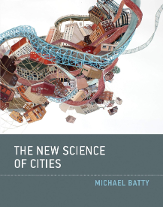
“…cities must now be looked at as constellations of interactions, communications, relations, flows, and networks rather … than locations […] location is, in effect, a synthesis of interactions.”
— Michael Batty, 2013
Organized Complexity
Jane Jacobs
Cities are not:
- Problems of
Simplicity - Problems of
Disorganized Complexity(millions of random variables).
They are problems of Organized Complexity:
- A huge number of factors which are interrelated into an organic whole.
The Interconnection of Parts
“The city is not a work of art… the city is a process.” – J.Jacobs
- It is a Bottom-Up system.
- Small, local interactions \(\rightarrow\) Large, global patterns.
Complexity Science
The Reductionist Shortcut:
- A mental habit of breaking the city into isolated “parts” to make it easier to manage.
The Complexity Reality:
- Science not of the “atoms” (buildings, roads, people), but of the connections between them.
Cross-Scale Interactions
- Single street-level decisions ripples up to the metropolitan scale.
Systems
Complex
- Adaptive relationships.
- Emergent outcomes.
- More than the sum of its parts.
Complicated
- Fixed relationships.
- Predictable outcomes.
- The sum of its parts.




The City is not a Tree
“It is for this reason - because the mind’s first function is to reduce the ambiguity and overlap in a confusing situation … it is endowed with a basic intolerance for ambiguity - that structures like the city, which do require overlapping sets within them, are nevertheless persistently conceived as trees.” – Christooher Alexander
Systems Thinking 101
Systems Thinking
Seeing the Web of interactions
Linear Thinking
A \(\rightarrow\) B (Cause and Effect)
FOCUS ON THE RELATIONSHIP BETWEEN PARTS
NOT JUST PARTS THEMSELVES.
Modeling as a Heuristic
A model is not “The Truth.”
It is a Heuristic: a mental shortcut or tool for discovery.
- “All models are wrong, but some are useful” (George Box).
The Logics of Systems
Part II
Smart City’s brain
The Back-end
The heuristics, logic, and models.
The Front-end
Dashboards, visualizations, and stakeholder apps.
The Dimensions
of most urban logic modelling
SPATIAL
RELATIONAL
TEMPORAL
SYSTEMIC
1. The Spatial Dimension
- The Logic of “Where”: Focuses on geometry, distance, and density.
- Key Question: How does the physical arrangement of assets (buildings, parks, roads) determine urban performance?
- Core Concept: Social Physics. Just like gravity, “mass” (high-density jobs or housing) exerts a pull on the surrounding area.
2. The Relational Dimension
- The Logic of “Connection”: Focuses on topology and network hierarchy.
- Key Question: How is the city “wired”? Is it about how far you are in meters, or how many turns you are from the main network?
- Core Concept: Graph Theory. The city as nodes and edges.
3. The Temporal Dimension
- The Logic of “When”: Focuses on change, evolution, and path dependency.
- Key Question: How did the city get here, and how fast is it changing?
- Core Concept: Dynamics. Recognizing that an urban intervention today might take 10 years to show its true impact (delays).
4. The Systemic Dimension
- The Logic of “Why”: Focuses on causality and interdependencies.
- Key Question: What are the unintended consequences? If we improve transport, does it inadvertently raise rents and displace the people it was meant to help?
- Core Concept: Feedback Loops. Circular causality where an output of a system becomes an input for the next cycle.
The Models
only some…
| Land-Use Transport | Network Models |
|---|---|
| System Dynamics | Agent-based Models |
Land-Use Transport
LUTI
Primary Dimensions:
Spatial (High) + Relational (Medium)
The Anatomy
- Land-Use data
- Transport
The Engine
Uses gravity equations to find a state of “Equilibrium” between where people live, where they work, and how they travel.
Land-Use Transport
eg. Predicting the impact of a new Metro line on residential density in a suburban area.
Pros
Excellent for long-term strategic planning and infrastructure “stress testing.”
Cons
Highly aggregate (treats people as masses) and mostly static (ignores the “chaos” of daily life).
What it lacks
Temporal and Systemic feedback. It assumes a city is a puzzle that can be “solved” into a perfect balance.
Network Models
NM eg. Space Syntax
Primary Dimensions:
Relational (High) + Spatial (Medium)
The Anatomy
- Nodes
- Edges
The Engine
Topological Analysis. It measures “centralities” to determine expected movement hierarchies.
Network Models
eg. Redesigning a town center to increase footfall for local shops by improving topological connectivity.
Pros
Very high correlation with real-world human movement; requires minimal data (just the map).
Cons
Can be “blind” to land use. It might predict high movement on a street that is topologically central but has no reason for people to go there.
What it lacks
Systemic “Attractors.” It prioritizes the shape of the container over the content inside it.
System Dynamics
SD eg. The Forrester Model
Primary Dimensions:
Temporal (High) + Relational (High)
The Anatomy
- Stocks (Accumulations)
- Flows (Rates of change)
- Feedback Loops
The Engine
Differential Equations. It simulates how quantities (stocks) change over time based on rates of change (e.g., construction rate).
System Dynamics
eg. Modeling how a city-wide “Air Quality Zone” affects car ownership and public health over two decades.
Pros
Powerful for identifying “Policy Resistance” and understanding long-term, non-linear consequences.
Cons
“Spatially Blind”—it treats the entire city (or zone) as a single bucket, ignoring internal geography.
What it lacks
Spatial Granularity. It assumes a city is a “well-mixed” vat of variables rather than a physical place with unique neighborhoods.
Agent-Based Models
ABM & Celullar Automata (CA)
Primary Dimensions:
Spatial (High) + Systemic (High) + Temporal (Medium).
The Anatomy
- Agents: (People, vehicles, firms) with unique attributes.
- Rules: Simple “If/Then” behaviors.
- Environment: The grid or network they inhabit.
The Engine
Bottom-up Micro-simulation. Simple rules from the agents give rise to “emergent” states from thousands of these local interactions.
Agent-Based Models
_eg. Simulating pedestrian evacuation patterns in a high-density transit hub to identify “bottlenecks” that traditional flow models miss.
Pros
Captures “Emergent Phenomena” and diversity; allows for the modeling of irrational or “human” behaviors.
Cons
Computationally expensive; very difficult to “validate” because small changes in rules can lead to wildly different outcomes.
What it lacks
Predictive Certainty. Because it is stochastic (probabilistic), it gives you a range of “possible futures” rather than a single definitive answer.
One model strength is the other model’s weakness
| LUTI | NM | SD | ABM | CA | |
|---|---|---|---|---|---|
| Spatial | \(\uparrow\) | ~ | ~ | \(\uparrow\) | |
| Relational | ~ | \(\uparrow\) | |||
| Systemic | ~ | ~ | \(\uparrow\) | ||
| Temporal | \(\uparrow\) | \(\uparrow\) | ~ |
\(\uparrow\) = high \(\~\) = medium
Important
Most modern models have figured out a way to incorporate (almost) all dimensions to different degrees. Yet own their heuristic limit their integration efficacy.
Workshop
Mapping your wicked problem
The “Wicked” Problem
- Urban challenges are not puzzles (with one right answer).
- They are Wicked Problems:
- They are interconnected: solving one creates another.
- They have no “stopping rule” or perfect solution.
- They are better or worse, not right or wrong.
Beyond the Mental Model
Setting the Boundary
A model is only as good as what you leave out.
- Endogenous: Factors the system controls.
- Exogenous: Factors outside our influence (the “Environment”).
The Challenge: If you draw the boundary too small, you miss the “Wicked” side-effects.
Feedback Loops
Enable the discovery of :
emergencepath dependencytiping pointsequilibrium/oscilation
Feedback Loops
System Archetypes
- Limits to Growth: A tech-hub grows fast until housing prices drive out the talent, hitting a plateau.
- Eroding Goals: Reducing environmental targets because the current infrastructure “cannot handle” the cost of meeting them.
- Growth and Underinvestment: Demand for public transit grows, but the city delays purchasing new trains, leading to a collapse in service quality.
- Fixes that Fail: Widening a road to fix traffic leads to “induced demand,” creating more traffic than before.
- Shifting the Burden: Using temporary “band-aid” repairs on aging water pipes instead of replacing the fundamental infrastructure.
- Escalation: Two neighboring districts compete to offer the lowest taxes to attract firms, eventually bankrupting their own public services.
- Tragedy of the Commons: Unregulated groundwater extraction by individual buildings leading to the sinking of the entire city’s foundation.
- Success to the Successful: High-income neighborhoods receive the best schools, which increases property values and further concentrates educational funding there.
- Accidental Adversaries: A transit agency and a housing department both try to optimize their own KPIs, but end up blocking each other’s long-term goals.
Workshop: Mapping the Logic
Tool: ncase.me/loopy
The Mission
Translate your “Wicked Problem” from a vague concept into a functional Causal Loop Diagram.
1. Set the Frame
- Define Boundaries: What is in your system? What is exogenous “noise”?
- Temporal Scale: Is this a 24-hour traffic cycle or a 20-year gentrification process?
2. Build the Logic
- Extract Nodes: Identify the 5–8 core variables (Social & Technical).
- Connect & Loop: Draw the arrows. Is the relationship (+) or (-)?
- Find the Archetype: Can you spot a “Fix that Fail” or “Limits to Growth”?
Workshop: What we are doing
Focus on the Logic, not the math.
🎯 The Focus
- Relationships: How A affects B.
- Feedback: Identifying reinforcing and balancing loops.
- Communication: Making the “invisible” logic visible.
🛑 Not Today
- Stocks: We aren’t measuring exact “buckets” of volume.
- Flow Rates: We aren’t calculating precise liters/people per second.
- Validation: We are mapping theories, not yet proving them.
SMUA 4500 Smart Cities - Greg Maya ©