AI & Smart City

From Systems Logic to Black Box Realities

Session Roadmap

  • Act I: The Philosophical Shift (Logic vs. Data)
  • Act II: The Toolbox (ML for Planners)
  • Act III: AI & The Digital Twin (The Brain and the Body)
  • Act IV: The Skeptical Planner (Ethics and Limitations)

Act I : Philosophical Shift

Moving from transparent logic \(\rightarrow\) opaque data

Recap

“Logic Precedes Display”


Systems Thinking

We draw the arrows.

We define the relationships.

Transparency

Every feedback loop is traceable.

Human Brain

The planner remains the architect of the system logic.

The New Paradigm

“Data Precedes Logic”


AI Shift

We provide the “Display” (historical data), and the AI guesses the “Logic.”

Inductive Reasoning

Finding patterns without being told the rules.

Trade-off

Efficiency vs. Interpretability.

The New Paradigm


Traditional Models AI / Black Box
Source of Logic Human Expertise (Top-Down) Data Patterns (Bottom-Up)
Traceability High (Open Logic) Low (The “Black Box”)
Handling Complexity Simplified for Clarity Embraces Noise & Nuance
Goal To Understand why To Predict what

What DEEP LEARNING is

(and isn’t)

It IS

High-dimensional statistics and semantic interpretation.

It is NOT

A sentient crystal ball or “The Matrix.”

Predicting the Next Move

AI looks at a problem as a sequence of probabilities.

https://jphwang-colorful-vectors.hf.space

Industry vs. Regulation

The “Test Bed”

Tech enters the city as a commercial agent first.

The Lag

Technology matures in the private sector before planners create the rules.

A Real World Example

WAYMO in USA

The Semantic Engine

Turning Reality into Vectors

  • Semantic Interpretation: AI doesn’t see “cars” or “curbs”; it sees high-dimensional numbers (vectors).
  • Multi-dimensional Context: It relates a “Bus Stop” to “Time of Day,” “Weather,” and “Historical Crowd Density” simultaneously.
  • Predicting the Next Move: If the pattern is \(X \rightarrow Y \rightarrow Z\), the AI predicts \(Z+1\).

Act II: The Toolbox

The Hierarchical Toolbox

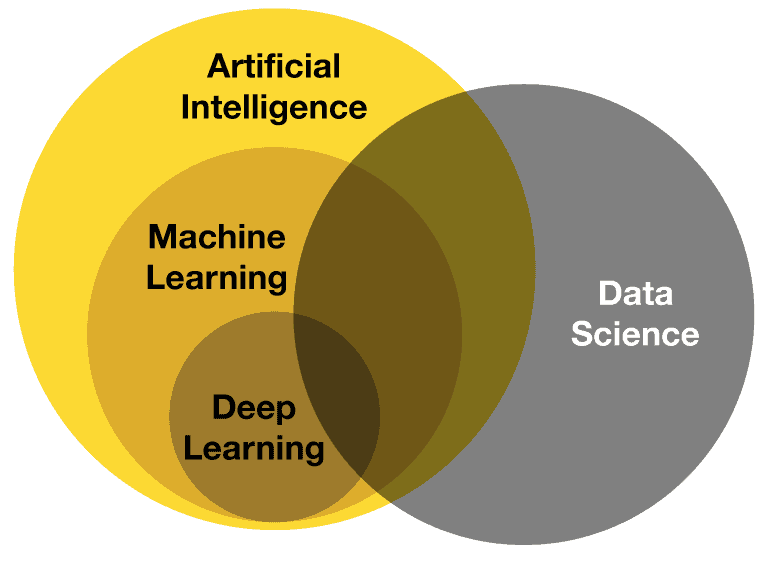
1. Artificial Intelligence (AI)

The Broad Umbrella

Machines mimicking human intelligence or reasoning.

Often “Rule-Based” in its simplest form.

Making choices based on inputs.
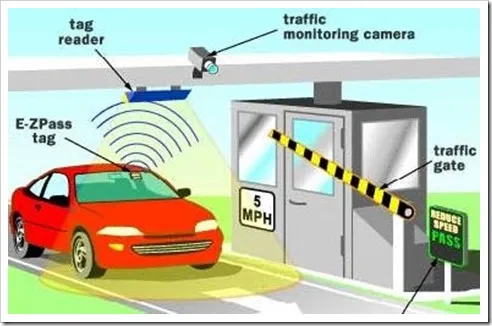
Example: Automated Tolls

2. Machine Learning (ML)

Learning from Patterns

graph TD
    %% Main Branch
    ML[ML] --> SL(Supervised)
    ML --> UL(Unsupervised)
    ML --> RL(Reinforcement)

 %% Reinforcement Subgraph
    subgraph ...
        RL --> RL_Goal[<b>Reward Optimization</b><br/>Finding the Best Strategy<br/><i>e.g., Signal Timing</i>]
    end

    %% Unsupervised Subgraph
    subgraph ..
        UL --> UL_Clust[<b>Clustering</b><br/>Grouping Similar Units<br/><i>e.g., Neighborhood Types</i>]
        UL --> UL_Dim[<b>Dimensionality Reduction</b><br/>Simplifying Complex Data<br/><i>e.g., Reducing 50 variables to 3</i>]
    end

    %% Supervised Subgraph
    subgraph .
        SL --> SL_Class[<b>Classification</b><br/>Predicting Categories<br/><i>e.g., Land Use Type</i>]
        SL --> SL_Reg[<b>Regression</b><br/>Predicting Quantities<br/><i>e.g., House Prices</i>]
    end

    %% Styling
    style . fill:#c462dff,stroke:#aaaaaa,stroke-width:4px
    style .. fill:#c462dff,stroke:#aaaaaa,stroke-width:4px
    style ... fill:#c462dff,stroke:#aaaaaa,stroke-width:4px

2. Machine Learning (ML)

Supervised Learning

Algorithms trained on labeled datasets.

It learns the relationship between inputs (features) and a known outcome (labels).

Predict labels for unseen data based on historical “ground truth.”
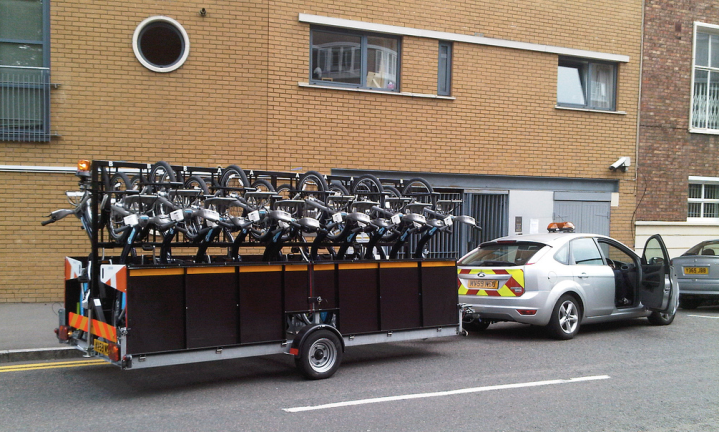
Demand Forecasting

2. Machine Learning (ML)

Unsupervised Learning

Algorithms based on unlabeled data.

It identifies hidden patterns, clusters, or anomalies without being told what to look for.

Exploratory analysis to discover “natural” groupings.
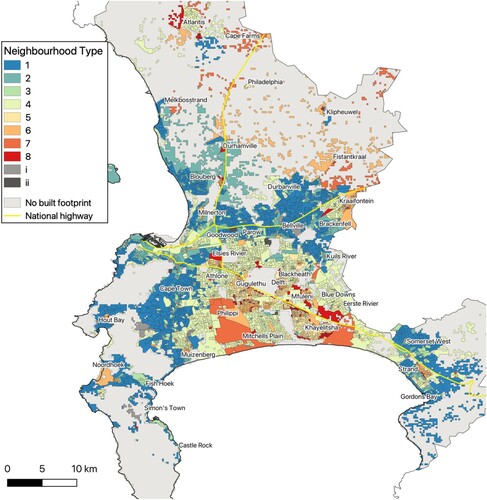
Neighborhood Typologies

2. Machine Learning (ML)

Reinforcement Learning

Algorithms that interact with an environment to maximize a Reward Signal.

Learning through feedback loops and penalties.

Find the most efficient strategy in a changing system.
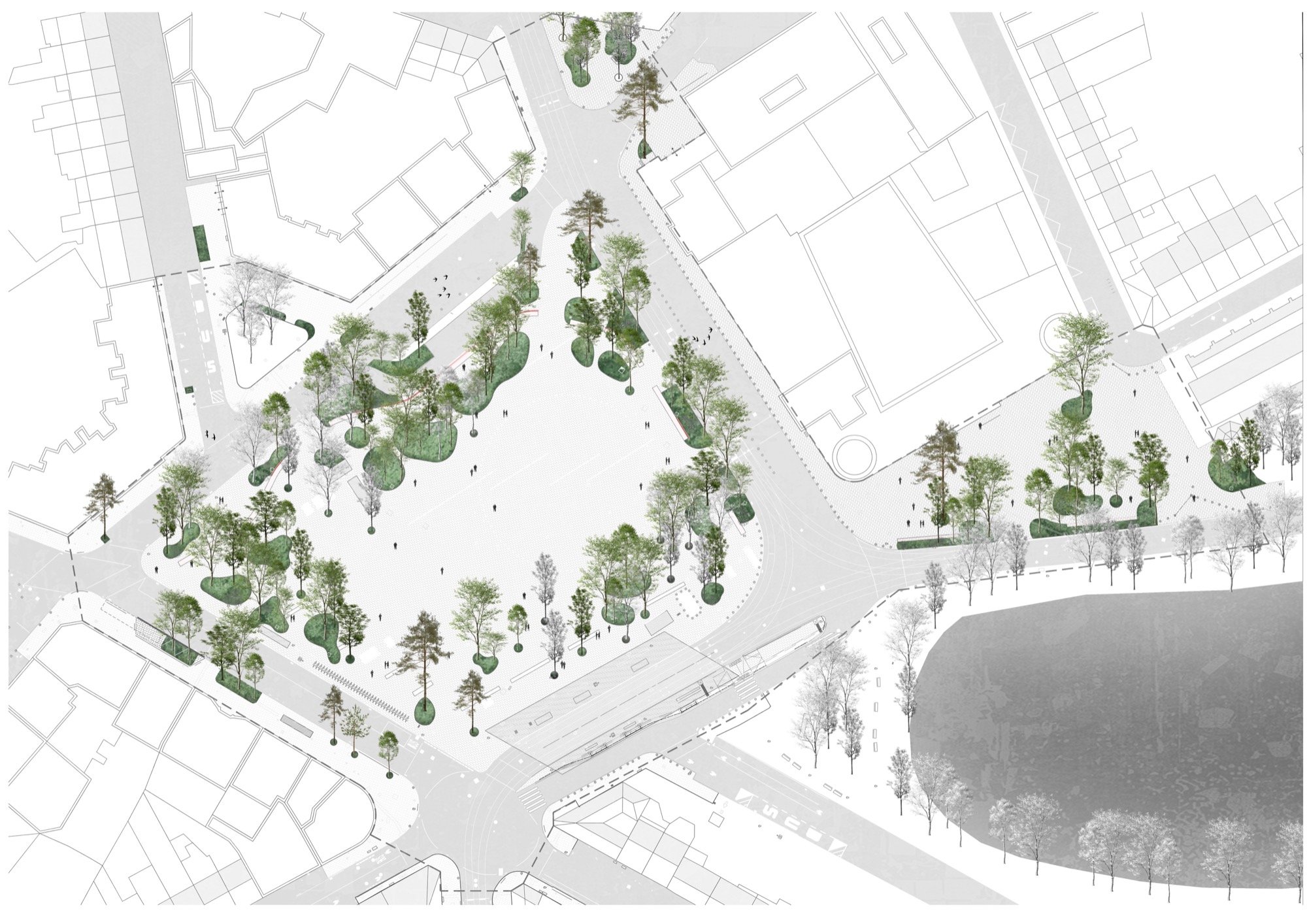
Heat Island Mitigation

A Real World Example

Traffic Monitoring in Pittsburgh, USA

3. Deep Learning (DL)

Processing Complexity

A subset of ML inspired by the human brain’s architecture (Neural Networks).

Uses multiple Hidden Layers to process high-dimensional, “messy” data like images, audio, or LiDAR.

Handles non-linear relationships.
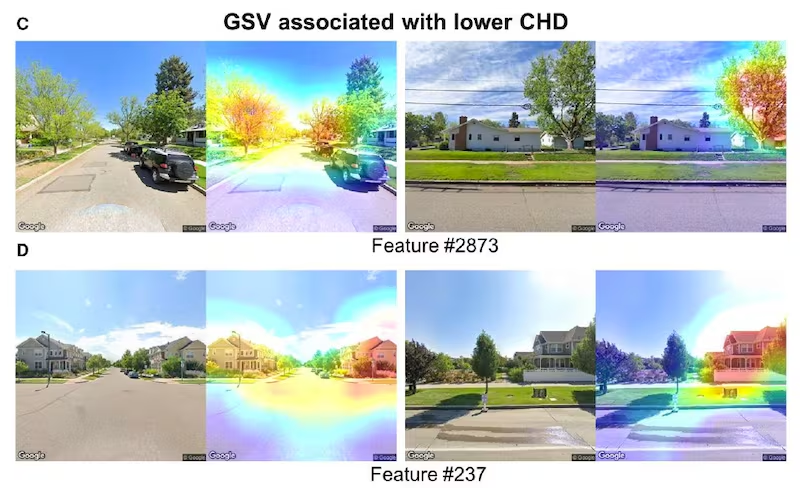
Heart Health

The Spatial Gap

as of ‘today’

Text-based Training

Most LLMs are trained on books and code, not geography.

Spatial Blindness

AI might know the word “street” but not the physics of a street.

The Horizon

The rise of Geo-Foundation models and satellite-based training.

Act III: AI & The Digital Twin

The Evolution of the Model

Demystifying the Synergy

AI \(\neq\) Digital Twin


AI

The analytical engine that processes the data.

Digital Twin

A dynamic virtual representation of a physical asset, process, or system.

Planning Moments


Analysis

Where you identify a problem.

Prediction

If you were to do something, then something might happen.

Interpretation

How do you communicate this to other people.


Not all Twins are created equal.

  • Not all require AI.
  • Not all need all three moments.

Moment 1: The Backend

“The Analysis”

Creating the Living Data Infrastructure

1.1 The Infrastructure (Interoperability)

Cities have “siloed” data (Transport, Energy, Health all use different formats).

The AI Role:

  • Data Weaver

1.2 The Analysis (Semantic Mapping)

Raw numbers don’t explain “Urban Behavior.”

The AI Role:

  • Semantic Interpretation

Moment 2: Operational

“The Prediction”

From “What is” \(\rightarrow\) “What if”

Scenario Testing

Static models cannot account for the “Wicked” variables of a living city.

The AI Role:

  • Generative Engine

Predictive States

Historical data alone doesn’t prepare a city for rare or extreme events.

The AI Role:

  • Predictive Optimizer

Predictions are not certainties

Multiple outcomes can help us understand potential responses.

Moment 3: Front-End

“The Interpretation”

Translating Complexity for Humans

Accessibility

Complex spatial data is often “locked” behind technical jargon or difficult software.

The AI Role:

  • Natural Language Interface

Contextualization

Raw visualizations can be misinterpreted by residents or non-technical stakeholders.

The AI Role:

  • Semantic Translator

The Integration Challenge

It’s Harder than it Looks


Interoperability

Getting “System A” (Transport) to talk to “System B” (Energy)

Data Latency

If the AI is too slow, the “Twin” is already showing the past, not the present.

Validation

How do we know the Twin’s “AI Brain” is telling the truth?

Act IV: The Skeptical (but Optimistic) Planner

Limitations and Ethics

The Traceability Trade-off

Explainability vs. Performance

Traceable Heuristics Opaque “Black Boxes”
The Pros We can read the rules. It provides a clear “Why” for policy decisions. Incredible accuracy. It finds patterns humans can’t see
The Cons May oversimplify “Wicked” complexity or miss subtle patterns. High opacity. We cannot explain the internal logic or “arrows.”
Best for Regulatory permits and long-term planning. Real-time management and rapid data processing.


In a democracy, is a “perfect” prediction useful if you cannot explain its logic to the public?

The Three Failures

Limits of the Black Box

Ethical Bias

AI learns from the past. If our historical data is biased (e.g., unequal investment), the AI will “optimize” that inequality into the future.

Hallucination

In complex systems, AI can find “patterns” that don’t exist—creating elegant but physically impossible solutions to urban problems.

Accountability

The “Liability Gap.” When a black box makes a mistake in a public street, we lose the clear line of responsibility required for local government.

Reshaping the Planner’s Role

Why there is hope

  • Liberating the Planner: AI handles the “disorganized complexity” (sorting millions of data points) so you can focus on the Ethics and Vision.
  • The Sandbox: It allows us to fail 1,000 times in a Digital Twin so we can succeed once in the real street.
  • Human-in-the-Loop: AI proposes, the Human disposes.
  • The Synthesis: Use AI for efficiency (the math), but keep Systems Thinking for efficacy (the goal).

Final Thoughts

  • Skepticism is a Skill: It is the bridge between a “Smart” city and a “Wise” city.
  • Logic still Precedes Display: Don’t let the beauty of a Digital Twin hide the opacity of its brain.
  • Your Role: You are the architect of the reward signals. What will you tell the AI to value?


“AI can find the pattern, but only the Planner can give it a Purpose.”