Smart Cities & the SDGs
Why the most effective city interventions often have no processor
Session Roadmap
- Part I: SDGs, Smart Cities & the Gap
- What the SDGs ask of cities
- Revisiting smart cities — low-tech is smart too
- The gap between technology and behavioural change
- Part II: Design for People
- How to diagnose before you design
- 8 behavioural concepts — each with a real-world example
- Closing: Synthesis & SDG Reconnection
Before we talk about cities…
Let’s remember why we’re building them.
What are the SDGs?
- 17 Sustainable Development Goals. One 2030 deadline.
- Not a wishlist — a moral and political commitment made by 193 nations
SDGs are wicked problems — no single solution, no stopping rule
Cities house 55% of the world’s population, generate 80% of global GDP, and produce 70% of greenhouse gas emissions. Most SDGs will be won or lost here.
The Urban SDGs
SDG 11
The Anchor
Sustainable Cities and Communities
- Affordable and adequate housing
- Safe and sustainable transport
- Inclusive and accessible public spaces
- Reduced environmental impact
- Resilience to climate and disaster
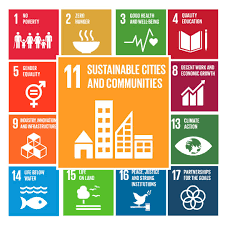
The Urban SDGs
Connected Urban Goals
- SDG 3 — Good Health (active mobility, clean air, green space)
- SDG 10 — Reduced Inequalities (access, public space as equaliser)
- SDG 13 — Climate Action (modal shift, nature-based solutions)
- SDG 15 — Life on Land (urban biodiversity, green corridors)
Smart Cities: A Recap
Sold as a high-tech promise:
- Real-time sensor networks monitoring everything
- AI-powered prediction and optimisation
- Digital twins simulating urban futures
- Seamless Mobility-as-a-Service platforms
The canonical examples:
Built. Expensive.
Often: half-empty.
- Songdo (South Korea)
- Sidewalk Toronto (cancelled, 2020)
- NEOM (under construction)
- Masdar City (stalled)
Smart ≠ High-Tech
“Smart” means effective.
- A well-placed bench that invites people to sit → smart intervention
- A narrowed road that slows cars without a sign → smart intervention
- A cycle lane that makes car trips optional → smart intervention
Low-tech IS smart city design — when it achieves the SDG outcome.
The Gap
High-tech smart city projects often underperform
The technology works.
- Sensors sense
- Algorithms optimise
- Dashboards display etc..
The city doesn’t change.
- People still drive
- Pollution still rises
- Inequality persists
The missing variable is not the system.
It is the people in it.
Design for People
The most powerful urban tool has no processor.
What is “Low-Tech”?
It is not primitive. It is human-centred.
Low-tech design is:
- Accessible without a device or signal
- Durable works in 10, 20, 50 years
- Legible understood without a manual
- Maintainable at low cost
Fails gracefully when it fails at all
Who needs a smartphone to use a bench?
Who gets excluded when the Wi-Fi goes down?
Who can maintain it after the consultant leaves?
Diagnose Before You Design
Solutions can be low-tech. Diagnosis can be hybrid.
Phase 1: Understand
What is actually happening here?
How do people move, gather, avoid? What paths do they really take? What spaces do they never use?
Phase 2: Design
What is the minimum effective intervention?
Work with observed behaviour — not assumed behaviour.
Diagnose Before You Design
Solutions can be low-tech. Diagnosis can be hybrid.
Low-Cost Diagnostic Tools
Walking audits
— J. Gehl methodology: go out, count, observe, record
Desire line mapping
— where are paths worn?
Participatory community mapping
— residents as data collectors
Open data
Sentinel satellite (free ESA), OpenStreetMap, Strava Metro cycling flows
Time-lapse cameras
Desire Lines
When planners build straight paths and people carve diagonal ones
Who is wrong?
“Desire lines are the city’s unwritten design critique.”
The worn path across the grass is not vandalism. → It is data.
What desire lines reveal
- How people actually navigate
- Where friction exists in the planned environment
- The gap between designed intent and lived experience
Woonerfs & Shared Space
“If you treat drivers like idiots, they act like idiots.”
Hans Monderman, Traffic Engineer (Netherlands)
- 2003: removed ALL traffic lights, signs, and kerbs from busy intersections
- Drivers were forced to negotiate — make eye contact — pay attention
Speeds dropped. Accidents fell. Pedestrians felt safer.
Uncertainty = attention = care.
Nudge Theory
“A nudge is any aspect of the choice […] that alters people’s behaviour in a predictable way without forbidding any options or significantly changing their […] incentives.”
- People do not make rational choices in a vacuum
- They respond to defaults, framing, salience, and friction
- Change the environment → change the behaviour
- No mandate. No fine. No app.
The Bench Test
William H. Whyte, The Social Life of Small Urban Spaces (1980)
Filmed New York City plazas systematically for years.
Revolutionary findings for their simplicity:
- People sit where there is sun
- People sit where they can watch activity
- People sit where they can face each other
- Movable chairs > fixed benches agency matters
The best public spaces are designed from observation, not assumption.
Levers of Behavioural Change
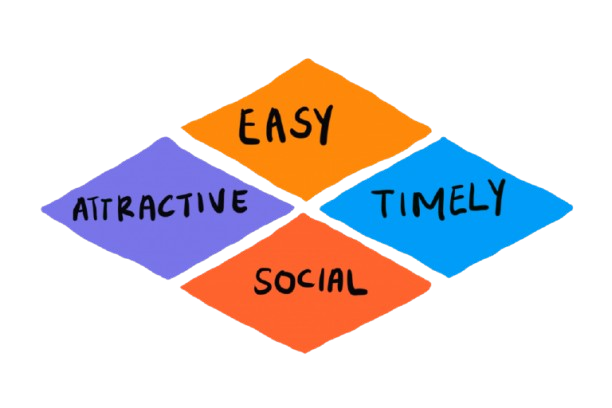
EAST Framework — Behavioural Insights Team (UK)
These are the levers planners pull — with or without technology.
E — Easy Remove friction from the desired behaviour.
A — Attractive Make the good option visible and appealing.
S — Social Leverage norms: what do others do here?
T — Timely Intervene at the right moment.
Bogotá’s Ciclovía
Every Sunday, 75 km of streets close to motor traffic.
2 million people walk, cycle, dance, and exercise.
No app. No sensor. No algorithm.
Just: a policy decision + a bollard.
EAST in action
- E: Streets are safe — cars excluded
- A: Festive, colourful, communal
- S: Everyone is here — 2 million people
- T: Weekly ritual — it is just what Sundays mean
Started in 1976. Still running. Zero technology required.
Eyes on the Street
“The bedrock attribute of a successful city district is that a person must feel personally safe and secure on the street among all these strangers.”
— Jane Jacobs, The Death and Life of Great American Cities (1961)
- Mixed use creates continuous activity at different hours — always someone watching
- Short blocks create more intersections, more movement, more eyes
- Active frontages: shops, cafés, entrances at street level
Safety without cameras — natural surveillance as emergent design property
Tactical Urbanism
Cheap. Reversible. Testable.
Activate the street first. Then build.
PARK(ing) Day
(San Francisco, 2005) - 1 parking space → micro-park for one day - Originally guerrilla activism; now a global annual event in 1,000+ cities
Paint-on bike lanes
(Bogotá, NYC Broadway, etc..) - Test a cycle route with paint before committing to concrete - Measure use. Adjust. Then build.
Times Square, NY
2009 — NYC DOT temporarily closed Broadway to cars. (J.SadiK Khan) Result: foot traffic increased, air quality improved, businesses reported higher sales. 2010: made permanent.
The 15-Minute City
Carlos Moreno — Paris
The idea: every essential service within 15 minutes on foot or bicycle.
Not a technology. Not an app.
A zoning and density policy.
When the destination is reachable, the car becomes optional.
Behaviour changes without mandating it.
CPH Cycling Revolution
62% of Copenhagen residents cycle daily.
This did not happen because of a routing app.
It happened because of 40 years of sustained investment in cycling infrastructure beginning with the 1970s oil crisis.- Protected lanes on every major street
- Cyclist-priority traffic signals
- Integration with public transport
- Annual “Cycling Account” measuring returns
The sequence that matters:
- Build the infrastructure
- Behaviour shifts
- Culture normalises
- Then monitor and optimise
Technology followed the behaviour.
Behaviour followed the design.
Nature-Based Solutions
Working with natural processes — not engineering around them
Hard infrastructure:
- Concrete drainage channels
- Underground stormwater tunnels
- Sensor networks managing flow
- High maintenance cost
- Single function
Nature-Based Solutions:
- Bioswales and retention ponds
- Green roofs and permeable surfaces
- Urban forests as flood buffers
- Lower long-term maintenance cost
- Multi-functional: flood control + cooling + biodiversity + wellbeing
CPH Cloudburst Management
The world’s most celebrated cloudburst management plan.
Option A: Smart Drainage
- Sensors throughout the network
- AI-predicted stormwater routing
- Real-time flow management
- High capital and maintenance cost
- One function: handle water
Option B: Green Infrastructure ✓
- Sunken courtyards that flood deliberately
- Permeable streets and green roofs
- Water retained where it falls
- Lower long-term cost
- Also: parks, cooling, social space, biodiversity
Synthesis
Understand
Diagnose without a six-figure platform
- Walking audits
- Desire line reading
- Community observation
- Open data
Design
Work with human behaviour
- Nudge, don’t mandate
- Make the good option easy
- Add nature as infrastructure
- Test cheaply before building
Achieve
The SDG outcome
- Healthier people (SDG 3)
- Accessible space (SDG 10)
- Sustainable mobility (SDG 11)
- Climate resilience (SDG 13)
Each of these interventions achieved an SDG outcome.
None of them required a server.
Low-Tech Outperforming High-Tech
| Low-Tech | High-Tech | |
|---|---|---|
| Durability | Decades | 5–10 year cycles |
| Accessibility | Universal | Requires device / data literacy |
| Maintenance | Low | High (and often cut) |
| Failure mode | Graceful | Catastrophic |
| Legibility | Intuitive | Requires training |
| SDG equity | Reaches all residents | May exclude the vulnerable |
Design for the 2030 Agenda
The principles of low-tech design are not nostalgic. They are the most durable path to the commitments we made.
- SDGs frame the why. Design determines the how. Evaluate every intervention against its SDG contribution — not its technical sophistication.
- Human psychology is the core competency. Desire, nudge, legibility, nature — these determine whether an intervention changes behaviour.
- Low-tech interventions are often the most durable, equitable, and impactful. The bench. The bike lane. The stream. They outlast the platform.
- “Smart” means effective — not digital. A city that works for all its inhabitants — with or without a signal — is a smart city.
SMUA 4500 Smart Cities - Greg Maya © | ↩︎ Back to course